What Is “Correct” Music?
In our complex and hectic world, full of informational chaos, it is difficult to concentrate on higher things. The simplest way to maintain consciousness at a high level is to listen to the right music.
Music is a very subtle instrument. It elevates consciousness better than any prayer. Its impact is stronger than that of paintings by artists or works of writers and poets. It is said that architecture is frozen music.
In order to remain in the proper state necessary for creativity and any other activity, one should listen to the right music at least twice a day. This increases the vibration of the listener and the vibration of the place where they are. The more we listen to the right music, the better the condition of the planet becomes.
The physical plane is sound, vibration. By filling the world with the right sounds, we change it.
If people do not have time for spiritual practices or do not know how to read prayers and rosaries, it is enough to simply listen to the right music in the morning and evening—this already helps maintain consciousness at a high level.
However, most musical works filling the information space do not elevate consciousness. This applies not only to modern pop rhythms but also to contemporary orchestral performances of immortal classical music.
Let us examine what kind of music can be called “correct.”
Tatyana Mickushina
Light and Love!
Part 1. The A Note Should Be Tuned to 432 Hz
A Bit of History and Reflection
Over the centuries, music has constantly evolved, new musical instruments have appeared, and brilliant composers have been born.
Western classical music developed especially rapidly, with changing tonalities and timbres. There was no single standard pitch for tuning instruments-each composer, musician, or orchestra tuned their instruments in their own way.
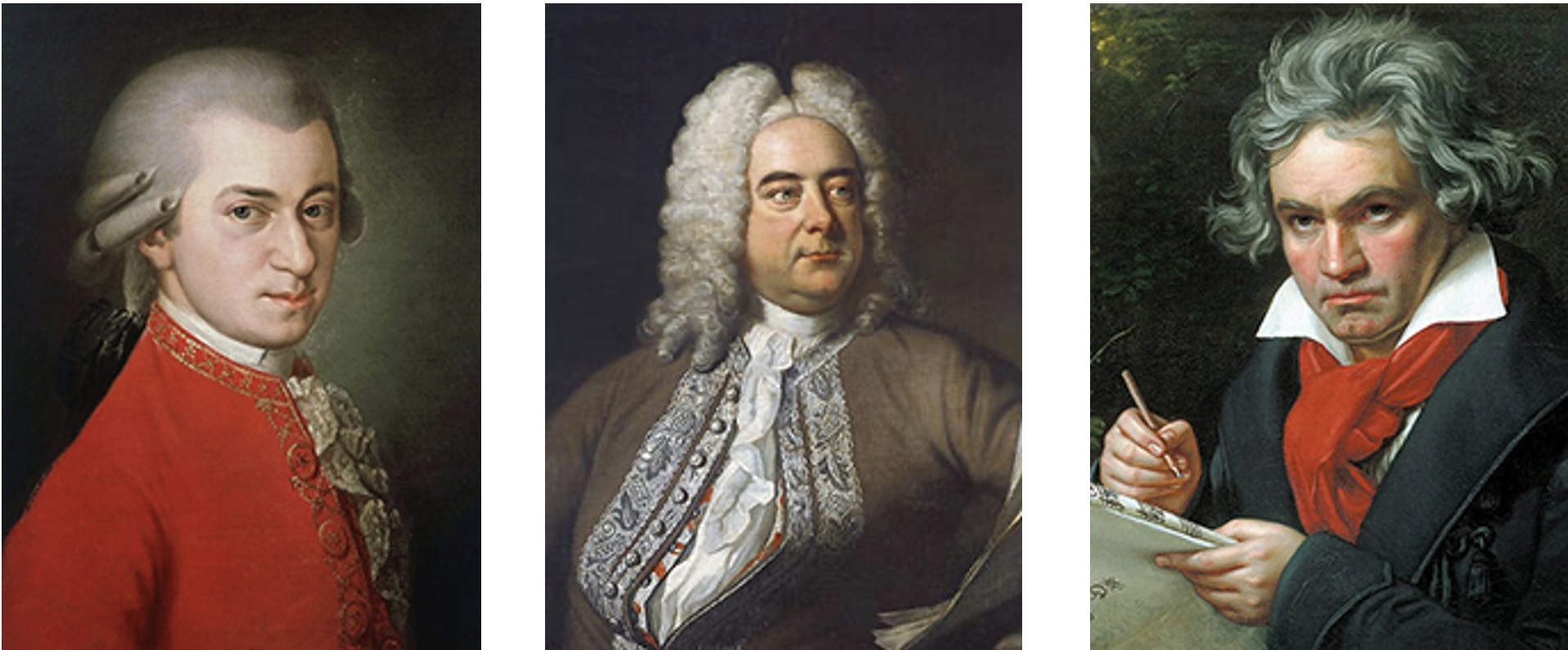
Great European composers Wolfgang Amadeus Mozart (1756–1791),
George Frideric Handel (1685–1759) and Ludwig van Beethoven (1770–1827)
In the 18th century, the situation changed: the Western musical community chose the note “A” of the first octave (designated as A4, where A is the note “A,” and the number эх 4 is the number of the first octave) as the standard for tuning instruments. All other notes are tuned in accordance with standard mathematical ratios derived from it (Fig. 1).

Fig. 1. Piano keyboard by octaves (the note “A” – A4, from which any instrument is tuned, is marked with a circle)
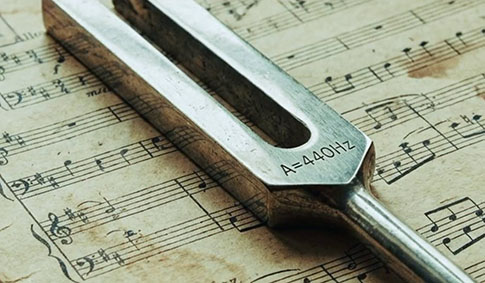
The tuning fork was invented in 1711 and made it possible to calibrate pitch. However, tuning forks had different pitches. For example, a tuning fork from 1740 associated with Handel was tuned to A = 422.5 Hz, while another from 1780 was tuned to A = 409 Hz, approximately a quarter tone lower. Beethoven’s tuning fork from around 1800 was 455.4 Hz, more than a semitone higher. Mozart experimented with different pitch standards, including A = 421 Hz.
By the end of the 18th century, the pitch of A4 varied between 400 and 450 Hz.
It should be noted that these frequencies were not precisely known to musicians of that time. Accurate measurements became possible only in the 19th century, starting in the 1830s, when frequency began to be measured in cycles per second. In the 20th century, this term was replaced by “hertz” (Hz), named after the German physicist Heinrich Hertz.
In 1884, the Italian composer Giuseppe Verdi (1813–1901), concerned about rising pitch levels, wrote to the Italian government asking to preserve the earlier tuning standard of A = 432 Hz. He explained that this tuning allowed opera singers to maintain natural vocal registers and reduced the risk of damage to older instruments designed for lower pitch. Today, this tuning is sometimes called the “Verdi tuning.”
However, the following year at a conference in Vienna, this standard was rejected. The Italian government’s musical commission ruled that all instruments and orchestras should use a tuning fork vibrating at 440 Hz.
A comparison of frequencies shows how notes differ when tuned to A = 440 Hz versus A = 432 Hz.
Table 1 presents, for comparison, the frequencies at which the notes of the first (middle) octave should sound when tuning the note “A” to 440 Hz and 432 Hz.
Table 1
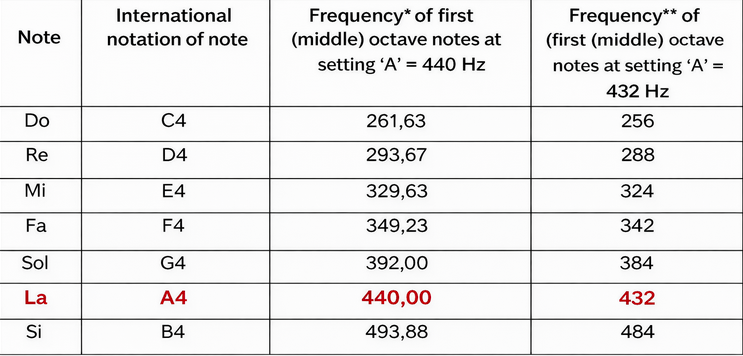
* Frequency values are given according to calculated tables.
** Frequency values are rounded to whole numbers.
Here it is necessary to explain why rounded numbers are presented in the last column of Table 1. To do this, let us consider Table 2.
Table 2
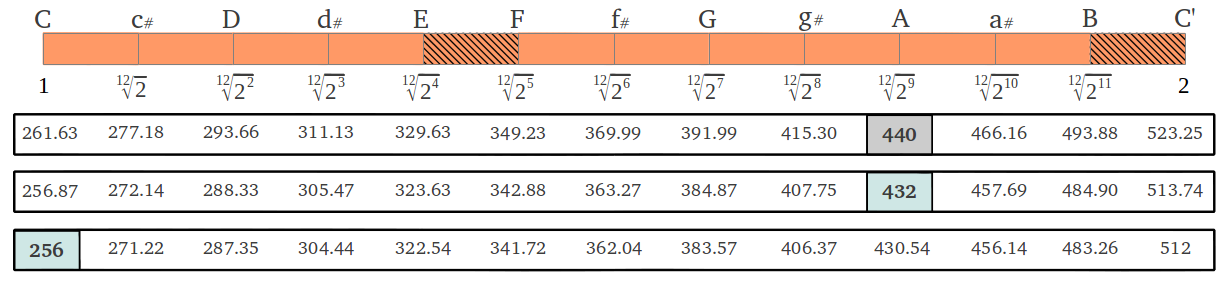
In the first row of Table 2, the names of the notes are given, where A is the note “A,” and C is the note “C” of the first octave. In the next row, coefficients are provided for calculating the frequencies of the other notes. In the third row, we see the numerical frequency values of all notes if the calculations are based on 440 Hz. In the fourth row-if the calculations are based on 432 Hz. However, if the calculations are not based on the note “A,” as in the previous rows, but on the note “C” with a frequency of 256 Hz (see the last row), we obtain somewhat different data. Thus, A in this case will be not 432 Hz, but 430.54 Hz. Therefore, in Table 1 we presented rounded frequency values of the notes of the first octave.
* * *
In 1910, physicist J. C. Deagan, an employee of the United States Navy and a student of Hermann Helmholtz, urged the American Federation of Musicians to adopt 440 Hz as the standard. Since Deagan was a professional in the field of the theory of light and sound, his opinion was heeded (9).
By 1926, the American music industry had reached this standard, and some companies began using it in the production of instruments.
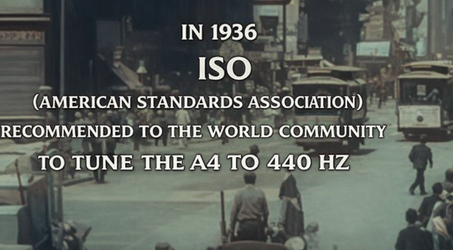
In 1936, the American Standards Association recommended to the world musical community to tune A4 to 440 Hz.
In the same 1936, in Germany the musical standard was switched to 440 Hz. And a military chime, designed by J. C. Deagan, was soon used for propaganda news during World War II.
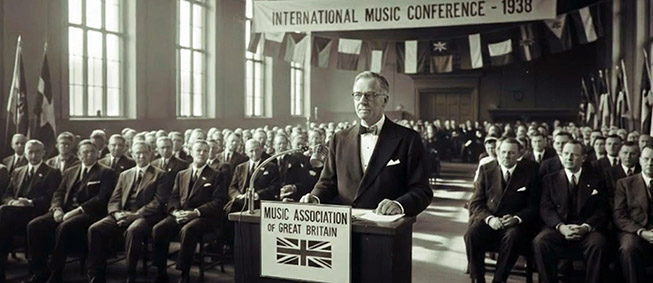
In 1937, a member of the Royal Society, Sir James Swinburne, an electrical engineer and industrialist, gave a lecture at the Royal Musical Association titled “The Ideal Scale,” in which he proposed a method of tuning the scale “in accordance with pure proportions.” The following year, Swinburne already represented the Musical Association of Great Britain at a preliminary international conference dedicated to the standardization of pitch. He argued that “the round number 440 is easier to factor and synthesize using electronics” (1). And already in 1939, delegates from leading European countries and the USA at a conference in London agreed with Swinburne’s position and adopted the 440 Hz standard.
In 1955, the International Organization for Standardization (ISO) adopted the ISO 16 standard, which firmly fixed the frequency of the reference “A” of the first octave at 440 Hz. The note received the designation A440.
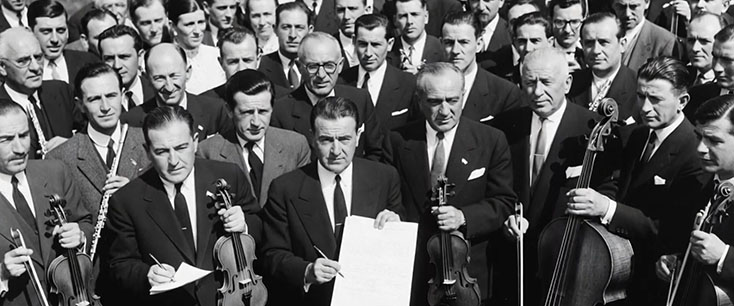
In response to the adopted decision, in the same year about 23 thousand musicians from France signed a memorandum in support of the “Verdi tuning” based on 432 Hz, but their appeal was ignored (9).
In 1988, Italian opera singers proposed to change the tuning pitch for orchestras of opera theaters to 432 Hz. However, in 1989, in accordance with European directives of 1975, the frequency of 440 Hz was established in Italy already at the legislative level.
Thus, the standard frequency for tuning musical instruments throughout the world is considered to be the frequency of the note “A” of the first octave equal to 440 Hz.
However, many musicians категорически do not agree with this standard, asserting that the frequency of 440 Hz is unnatural.
Let us ask ourselves questions.
Let us reflect on why a certain group of people, expending enormous efforts and colossal financial resources, so persistently promoted the idea of standardizing A4 specifically at 440 Hz.
Why would physicist J. C. Deagan, a U.S. Navy serviceman, persuade American musicians to adopt the 440 Hz standard and, moreover, develop a special military chime?
Let us note that at this very time the Rockefeller and Carnegie Foundations began providing grants to support the pseudoscience of “eugenics,” the postulates of which, a quarter of a century later, were insistently and consistently applied by Hitler, proving the superiority of the Aryan race.
Why would baronet Sir James Swinburne, a very wealthy industrialist but not a professional musician, so persistently and systematically at the highest level (through the Royal Society, and then at the headquarters of the British Broadcasting Corporation, the BBC) promote the idea of 440 Hz?
Why did Nazi Germany shortly before World War II introduce the 440 Hz standard? And it was done by none other than the leader of the Third Reich, the king of propaganda and mass control, Paul Joseph Goebbels. He is credited with the cynical phrase: “Give me the mass media, and I will turn any nation into a herd of pigs.” For this same purpose, Goebbels used music. He understood that it was possible to use a frequency that affects the human brain in a certain way, and thereby control a large number of people.
Laurent Rosenfeld, the author of the article “How the Nazis Ruined Musical Tuning” (1988), noted that it was Radio Berlin, Goebbels’ mouthpiece, that just three months before the start of the war organized a conference in 1939 to promote the 440 Hz standard.
The 440 Hz standard was established despite widespread rejection of this frequency by musicians around the world and at the very time when petrochemical and pharmaceutical companies financing the war were completing preparations for World War II.
Finally, why did the U.S. authorities, after adopting the A4 = 440 Hz standard in 1936, so persistently promote it throughout the world until in 1955 it became the international ISO 16 standard? And why did all attempts by the Italian, French, and other European musical communities to return to the 432 Hz standard fail?
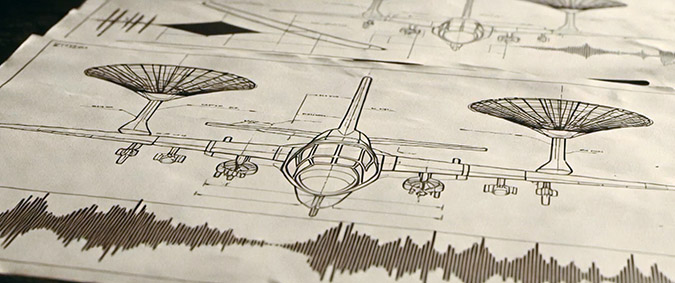
Years later, Professor James Tobias of the University of California (USA), having gained access to the archives of the Rockefeller Foundation, documented research by military and commercial circles on the use of acoustic vibrations for psychological influence on the enemy. According to J. Tobias, the U.S. Department of Defense during World War II was engaged in developments “including the construction of acoustic antennas placed on combat aircraft in order to influence enemy soldiers from the air” and to exert a psycho-emotional impact leading to “mass hysteria” (5).
The logical explanation that provides answers to all the questions posed above is only one: giant financial corporations, striving for total power around the world in all spheres of life, have extended their influence into the music industry as well. Representing their interests, the Rockefeller Foundation was interested in the A440 standard within the framework of a “war for consciousness,” leading to musical cult control.
In conclusion, let us cite a fragment from the annotation to the article “Cult Control of Music: The Rockefeller Foundation as an Instigator of the War on Consciousness through the Introduction of Standardized Musical Tuning to the Frequency A = 440 Hz” by the well-known doctor of medicine and natural health activist Leonard G. Horowitz:
“Monopolization of the music industry assigns a crucial role to this imposed frequency (A440), which ‘drives’ the population into even greater aggression, psychosocial anxiety, and causes emotional disorders, provoking physical illnesses in people and financial obligations that benefit the bosses, agencies, and companies that are part of the monopoly” (5).
The article was prepared by Elena Ilyina.
To be continued…
Sources:
- A440 (standard pitch). – URL: https://en.wikipedia.org/wiki/A440_(pitch_standard)
- Vitale Simone. 432 Hz – a new reference tone? – URL: https://sat-sound.com/432-hz-a-new-standard-pitch/
- Garyaev Pyotr. The law of seven notes // Music of the image. – URL: https://www.youtube.com/watch?v=Gjlgg53lKsk (accessed: 02.04.2026).
- Goldman J. Healing Sounds. – URL: https://coollib.cc/b/544570-dzhonatan-goldmen-tselitelnyie-zvuki/readp?p=18
- Horowitz Leonard. Cult control of music: how standardized tuning of music to the frequency A = 440 Hz was introduced. – URL: https://nashsolyaris.blogspot.com/2014/04/440_13.html?m=1
- Institute of Linguistic-Wave Genetics. Expansion of the model of wave genetic coding. – URL: https://wavegenetics.org/researches/volnovoy-geneticheskiy-kod/11/
- Kulakova M.A., Polyntsev D.A. Vibrating Universe / ed. by academician of EAEN, corresponding member of RAEN and MANEB V.A. Orlova. – URL: https://studfile.net/preview/7018321/
- On the tuning frequency at A = 432 and C = 128. – URL: https://sacred-geometry.es/?q=es/node/222
- The mystery of the 432 Hz frequency – how people are zombified bypassing consciousness. – URL: https://econet.ru/articles/107964-tayna-chastoty-432-gts-kak-zombiruyut-lyudey-v-obhod-soznaniya#.WNa72J7DB00.facebook